Elena Albrecht · 26 October 2026
Correlations between Access Tier Modifications and Activity Patterns in Specialized Member Portals
Specialized member portals organize user access through tiered structures that control feature availability, data depth, and interaction tools, while activity patterns emerge from login frequency, session duration, navigation paths, and content engagement rates. Researchers track these elements to identify how adjustments in tier assignments influence overall behavior across platforms in sectors such as professional networking, educational resources, and enterprise collaboration. Data from multiple monitoring systems show consistent relationships between tier upgrades or downgrades and shifts in how users interact with portal components over time.
Defining Access Tiers and Their Role in Portal Design
Access tiers function as layered permission sets that grant varying levels of entry to modules, reports, and customization options based on subscription levels or membership status, and organizations adjust these tiers through automated rules or manual overrides during renewals and promotions. Studies from research institutions indicate that basic tiers typically limit users to core viewing functions while premium tiers unlock advanced analytics, export capabilities, and real-time collaboration spaces. Observers note that modifications often occur in response to usage analytics or policy changes, creating direct links to how individuals allocate time within the system.
Patterns in User Activity Following Tier Adjustments
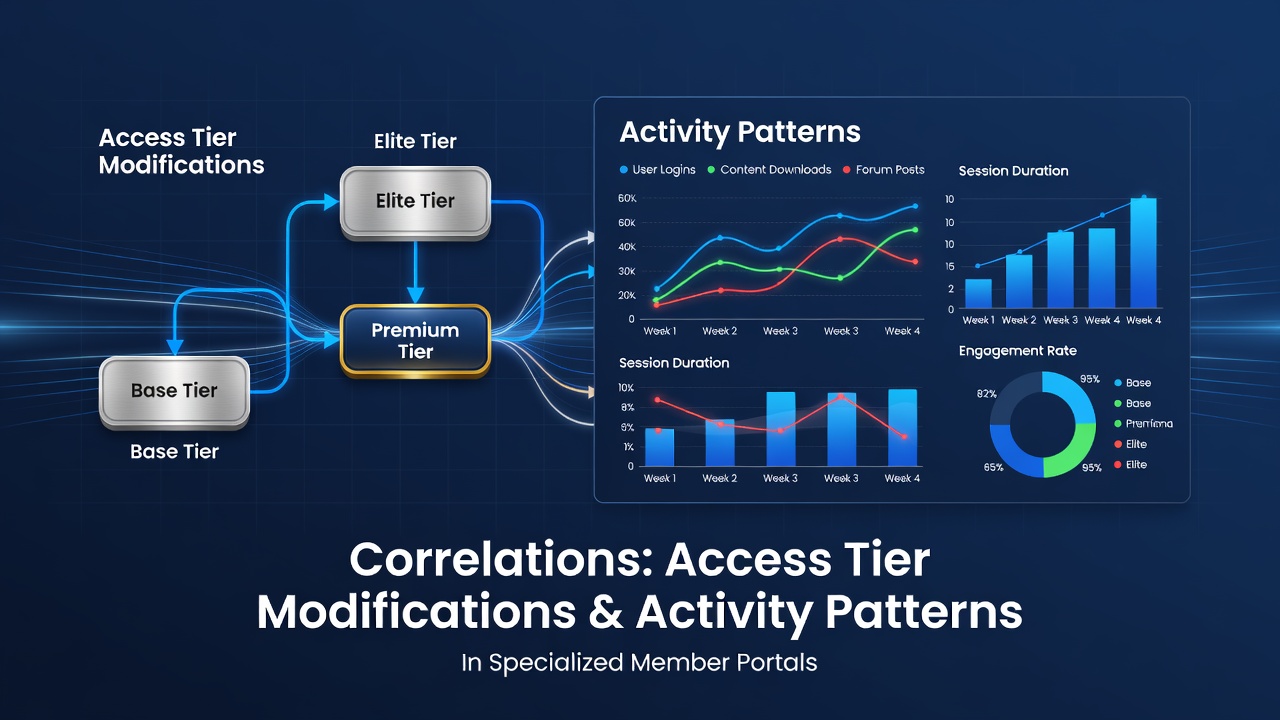
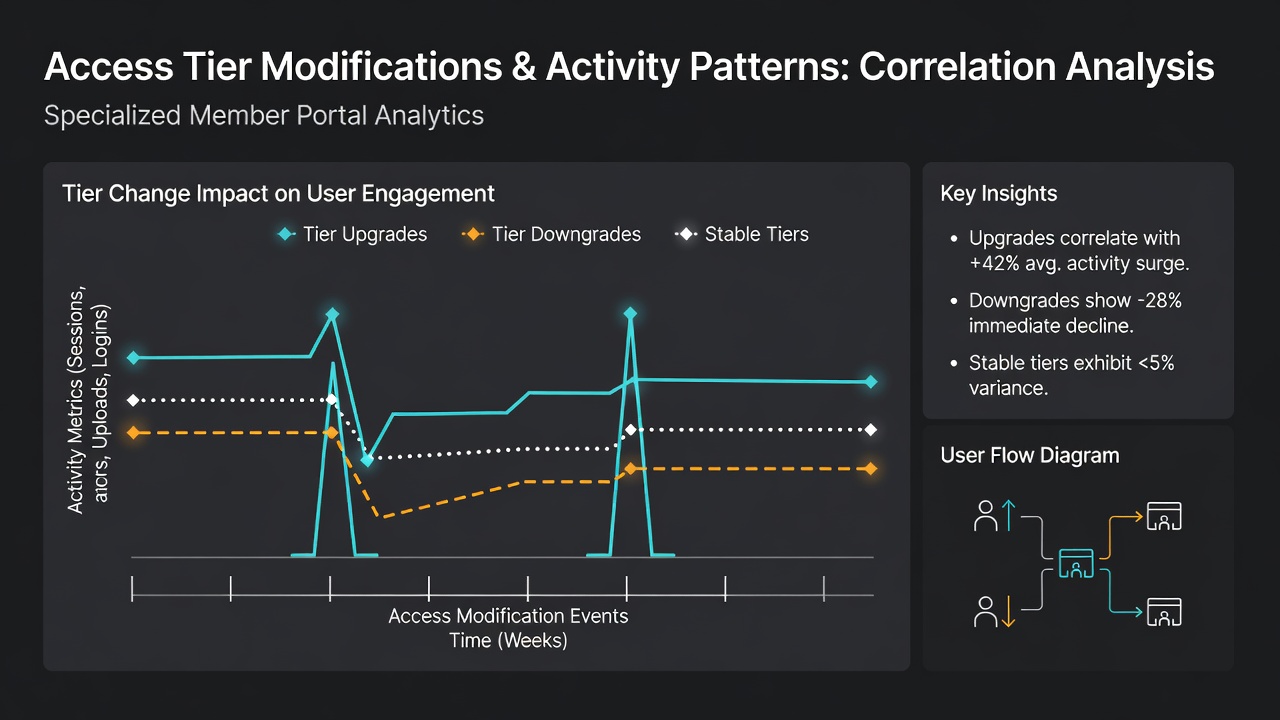
Activity logs reveal that users moved to higher tiers increase session lengths by engaging with newly available tools, whereas those shifted downward show reduced exploration and shorter visits concentrated on essential features. Figures from platform analytics demonstrate spikes in feature adoption rates immediately after upgrades, followed by stabilization periods where patterns settle into new routines. Those who have examined longitudinal data find that tier modifications correlate with changes in peak activity hours, with upgraded users often shifting toward evening or weekend access when advanced features support deeper work sessions.
Evidence from Monitoring Systems adn Reports
Analytics platforms record correlations through metrics such as page views per session, click-through rates on tier-specific content, and return visit intervals, while statistical models highlight positive associations between tier elevation and multi-device logins. According to findings shared by the European Commission digital services overview, organizations that implemented tier adjustments in 2025 observed measurable upticks in cross-feature navigation among affected user groups. In October 2026, ongoing system updates across several portals have continued to surface similar trends, with activity heatmaps illustrating concentrated engagement in premium sections post-modification.
Additional patterns surface when examining retention sequences, as users who receive tier enhancements maintain higher login consistency compared to those experiencing reductions, and data aggregation tools confirm these outcomes across varied demographic segments. Experts have observed that seasonal factors, including end-of-quarter reporting cycles, amplify the effects of tier changes on activity volume.
Case Examples from Operational Environments
One documented instance involved an educational resource portal where tier upgrades for select members led to a documented rise in discussion forum participation and resource download rates within the first month. Another case from an enterprise collaboration environment showed that downgraded access resulted in narrower focus on notification alerts rather than full dashboard exploration. Researchers compiled these observations through anonymized log reviews and found repeatable sequences where activity breadth expanded or contracted in direct proportion to tier scope.
Analytical Approaches to Measuring Correlations
Teams apply regression analysis and cohort tracking to quantify relationships, incorporating variables such as modification timing, prior activity baselines, and concurrent platform updates to isolate tier effects. Reports from institutions like Statistics Canada on digital engagement provide broader context on how access variations influence participation metrics in online environments. These methods allow observers to separate tier-driven changes from external influences like interface redesigns or external events.
Conclusion
Correlations between access tier modifications and activity patterns continue to inform portal management strategies through accumulated evidence from usage data and structured analysis. Patterns established in recent monitoring cycles, including those observed into October 2026, underscore the measurable connections that emerge when tier structures evolve. Continued examination of these dynamics supports refined approaches to membership systems across specialized platforms.