Yves Berger · 28 September 2026
Shifts in Content Prioritization Methods Following Platform Updates
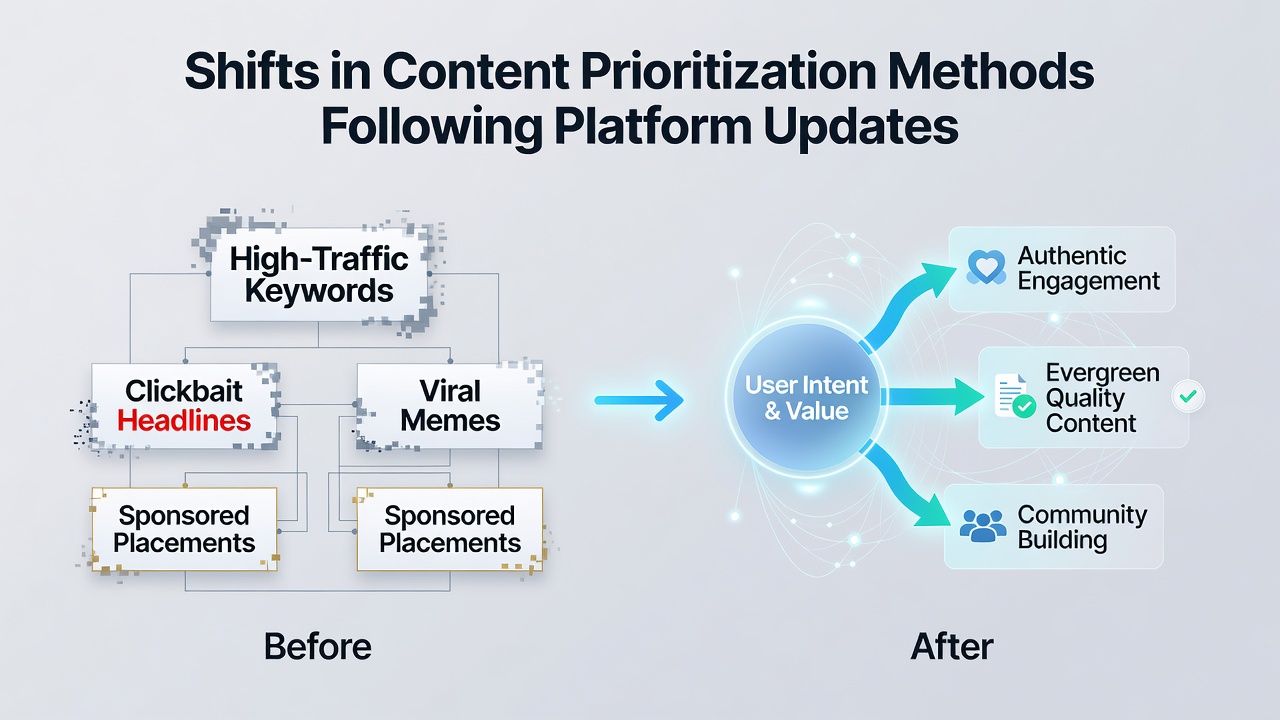
Platform operators have adjusted their content prioritization methods after multiple updates rolled out across major digital services in 2025 and into September 2026. These changes affect how search engines, social networks, and content distribution systems rank material based on new signals such as engagement depth, authenticity markers, and regional compliance requirements.
Algorithm Adjustments in Search and Discovery Systems
Search platforms modified ranking factors to emphasize user interaction patterns over traditional keyword density. Data from industry reports show that dwell time and return visit rates now carry greater weight in determining visibility, while thin content that fails to meet expanded quality thresholds receives reduced distribution. Observers note that these tweaks followed core updates designed to address duplicate material and low-value pages that had previously dominated results.
Social media networks implemented similar revisions, shifting focus toward session completion rates and cross-post interaction. Content that encourages extended viewing sessions or repeated shares gains preferential placement, whereas posts flagged for repetitive patterns drop in feed order. Researchers tracking these systems found that the adjustments coincided with new moderation layers aimed at reducing misinformation spread through algorithmic amplification.
Regional Regulatory Influences on Prioritization
European regulators introduced requirements under digital services legislation that prompted platforms to incorporate transparency metrics into their ranking logic. Operators now publish summaries of how content receives elevated or diminished priority, which has led to measurable shifts in how material from verified sources appears relative to user-generated uploads. Australian oversight bodies released parallel guidance on platform accountability, resulting in localized ranking experiments that test different weighting for news and educational content.
One study conducted by academic teams examined traffic distribution before and after these policy-driven changes. Figures revealed that platforms operating under stricter disclosure rules adjusted their internal scoring to favor content accompanied by clear sourcing information, while material lacking attribution experienced demotion in multiple regions simultaneously.
Technical Implementation of New Prioritization Signals
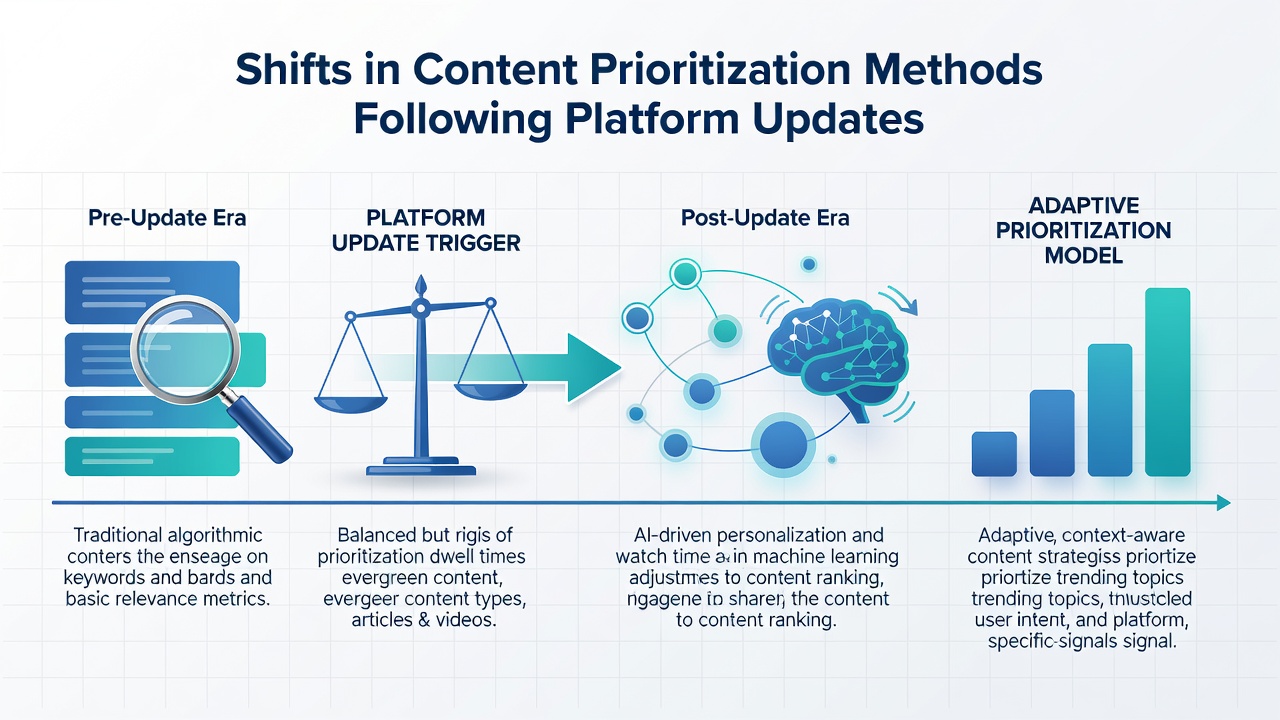
Engineers integrated machine learning models that evaluate content freshness alongside historical performance data. These models process signals such as update frequency, source credibility scores, and audience retention curves to assign priority levels in real time. Platforms that adopted these models reported faster response to trending topics while maintaining stability for evergreen material that meets updated quality benchmarks.
Content creators adapted workflows to align with the revised criteria, incorporating structured data markup and verified entity references that the new systems reward. Case examples documented by research groups illustrate how sites that added these elements saw improved distribution compared with those that retained older optimization approaches focused solely on volume.
Measurement and Reporting Changes
Analytics providers updated their dashboards to track the specific signals now driving prioritization. Metrics such as scroll depth combined with completion rates replaced simpler view counts in many reporting suites. Platform operators released documentation outlining the weighting applied to each factor, allowing third-party analysts to replicate portions of the ranking process for independent verification.
Industry organizations compiled comparative data across regions, showing that platforms applying consistent prioritization rules across borders achieved more uniform performance outcomes. Those operating under fragmented regional rules encountered greater variability in how identical content performed in different markets.
Longer-Term Effects on Content Ecosystems
Over successive update cycles, content libraries have undergone gradual rebalancing as older material either receives refreshed prioritization or fades from prominent placement. Archives that incorporate new metadata standards maintain visibility, whereas static collections without updates see progressive reduction in reach. Trade groups tracking these patterns documented steady migration toward hybrid production models that blend evergreen foundations with timely additions.
Evidence from multiple platform disclosures indicates that the combined impact of these shifts has altered traffic allocation between professional publishers and individual creators. Professional outlets that adopted the new technical requirements retained distribution advantages, while individual accounts relying on legacy posting habits experienced narrower reach windows.
Conclusion
Platform updates through September 2026 have produced measurable changes in content prioritization across search, social, and distribution systems. These adjustments center on engagement quality, regulatory compliance, and technical compliance markers that together determine visibility. Ongoing measurement by research institutions and regulatory bodies continues to document how these methods evolve and how content producers respond to the revised criteria.