Elena Albrecht · 9 November 2026
The Role of Adaptive Search Algorithms in Refining Discovery Experiences Across Niche Digital Communities
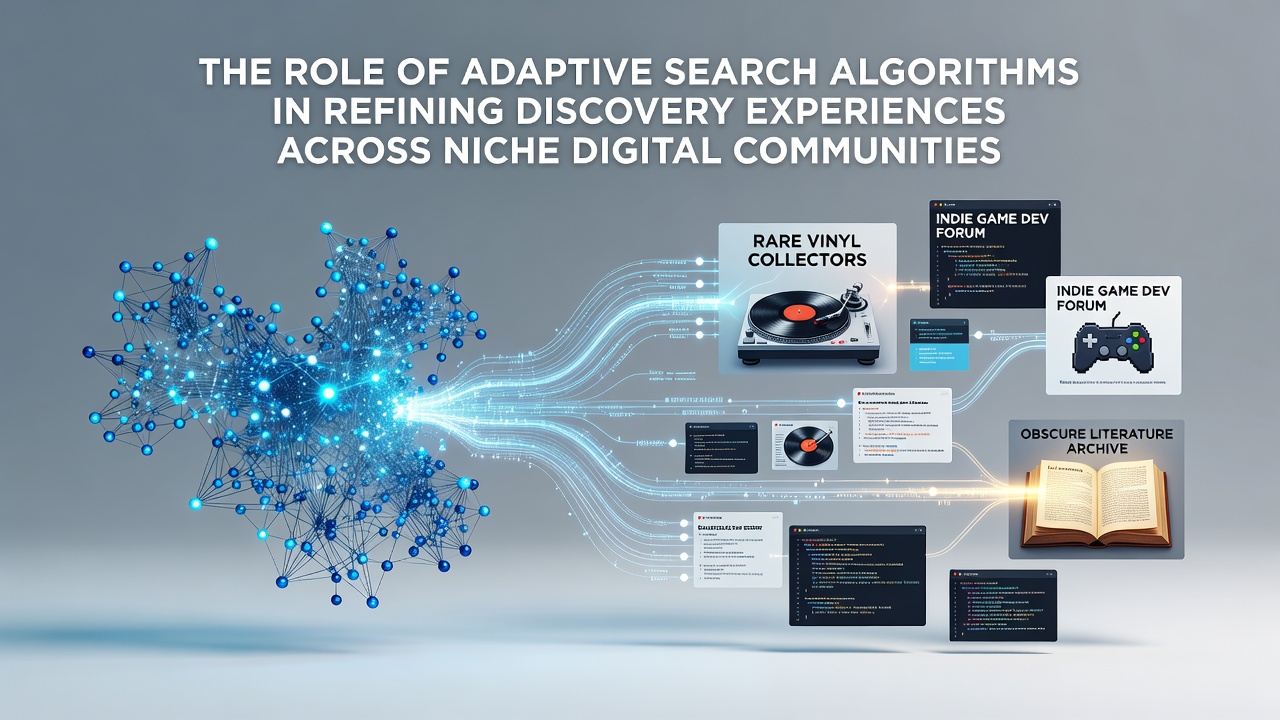
Adaptive search algorithms adjust their ranking and retrieval processes based on patterns of user interaction within specific digital spaces, and they have become central to how people locate content in communities focused on hobbies, professions, and shared interests. These systems analyze signals such as click sequences, dwell times, and contribution histories to modify results in real time, which allows platforms to surface material that aligns more closely with the evolving needs of their members. Observers note that the approach differs from static keyword matching because the models retrain on fresh data streams generated inside each community.
How Adaptive Algorithms Operate in Practice
Engineers design these algorithms to incorporate feedback loops that update relevance scores without requiring manual intervention from site administrators. A user who frequently engages with restoration techniques in a vintage automobile forum, for instance, will encounter posts about parts sourcing and technical manuals earlier in subsequent searches. The process relies on embedding techniques that represent both content and user behavior in shared vector spaces, which enables similarity calculations that evolve as new posts and comments appear. Studies from research institutions show that such updates can reduce the average number of queries needed to reach relevant items by measurable margins when tested on archived community datasets.
Implementation often combines collaborative filtering with content-based signals, yet the weighting between these components shifts according to community size and activity density. Smaller groups generate sparser interaction matrices, so algorithms in those environments place greater emphasis on textual similarity and metadata tags. Larger networks produce denser data, allowing models to identify subtle preference clusters that would remain hidden in low-volume settings.
Impact on Discovery in Specialized Groups
Niche communities centered on topics like urban foraging, independent game development, or regional genealogy have documented changes in engagement after deploying adaptive search tools. Members report locating archival threads and expert responses more quickly, which in turn supports sustained participation rather than one-off visits. Platform operators track metrics such as session duration and return frequency, and figures released by industry consortia indicate consistent lifts in these areas following algorithm rollouts.
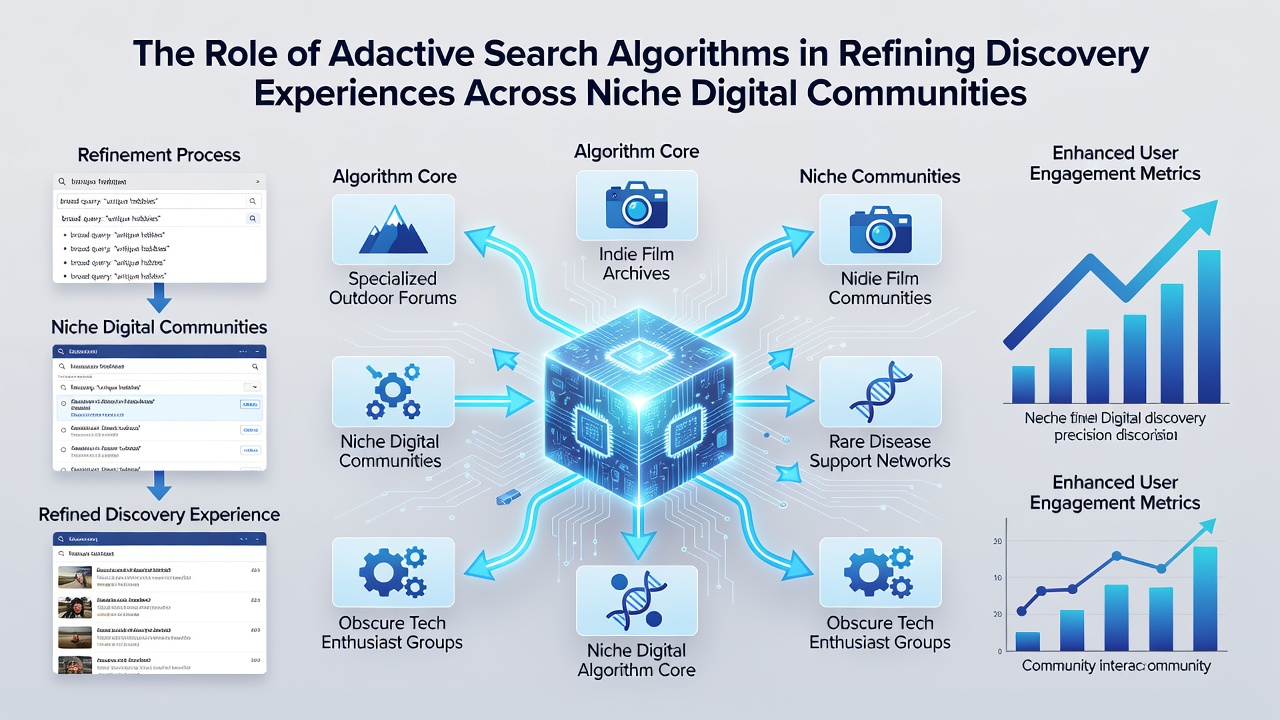
What's interesting is how these systems handle edge cases where terminology varies across subcultures. An algorithm trained on a photography collective might learn that “fast glass” refers to wide-aperture lenses, then apply that mapping only within that community’s index while preserving standard definitions elsewhere. This compartmentalization prevents cross-contamination between unrelated groups that share overlapping vocabulary. Researchers at academic centers have examined these localized vocabularies and found they improve precision without sacrificing recall when the models remain isolated by community boundaries.
Technical Considerations and Data Requirements
Training data for adaptive search comes primarily from anonymized logs that capture search queries alongside subsequent actions such as clicks, saves, or replies. Privacy frameworks require that individual identifiers are stripped or aggregated before model updates occur, and compliance with regulations in multiple jurisdictions shapes how long these logs are retained. In November 2026 several platforms plan to introduce stricter retention limits that will force developers to explore federated learning approaches, where model improvements happen locally before aggregated parameters are shared.
Scalability presents another constraint because niche sites often operate with modest infrastructure budgets. Lightweight embedding models and incremental update methods allow retraining on modest hardware, while batch processing during off-peak hours keeps latency low for end users. Observers note that open-source libraries have lowered the barrier for smaller operators to experiment with these techniques, leading to wider adoption across independent forums and membership sites.
Challenges in Maintaining Relevance
Concept drift occurs when community interests shift rapidly, such as during product launches or seasonal events, and algorithms must detect these changes without overreacting to temporary spikes. Techniques like sliding-window evaluation and periodic human review of sample queries help maintain stability. Data from a multi-year study conducted by a Canadian research university revealed that communities experiencing sudden membership growth required more frequent recalibration to avoid surfacing outdated popular content at the expense of newer contributions.
Bias in training data can also surface when early adopters dominate interaction logs, causing the system to favor their preferences. Mitigation strategies include stratified sampling and explicit diversity objectives during ranking, which some platforms have begun to test in controlled pilots. Those who have implemented such adjustments report broader exposure for newer members and content from underrepresented subgroups within the same community.
Conclusion
Adaptive search algorithms continue to shape how discovery functions inside digital communities by processing interaction data into evolving relevance models. Their deployment across hobbyist, professional, and interest-based platforms demonstrates measurable effects on how quickly members locate pertinent material and sustain engagement. As technical approaches mature and regulatory requirements evolve, the mechanisms that support these systems will likely incorporate greater emphasis on privacy-preserving methods and localized adaptation. The patterns observed so far indicate that continued refinement will depend on balancing computational efficiency with the unique characteristics of each community’s data environment.